



































Entrance Exam on School Recommendation Overview
Fiscal Year 9 2027 Entrance Exam on School Recommendation (Fiscal Year 8 2026 The details of the implementation are as follows:
The Entrance Exam on School Recommendation assesses basic academic abilities through aptitude tests (Comprehensive Problems I and II) and assesses whether applicants possess the necessary skills and aptitudes to study at this university through an interview.
The following content may be subject to change due to unforeseen circumstances.
Exam Date
| Application Period | Wednesday, November 8, 11 November 4 (Wed), 2026 ~Friday, October 8, 11rd year of Reiwa November 13 (Fri), 2026 |
|---|---|
| Exam Date | Saturday, March 8, 11rd year of Reiwa November 28 (Sat), 2026 ,Sunday, October 8, 11nd year of Reiwa November 29 (Sun), 2026 |
| Announcement of Successful Applicants | Friday, October 8, 12rd year of Reiwa December 4 (Fri), 2026 |
Eligibility
- Applicants must be recommended by their high school principal based on their ability and aptitude for studying at this university (preferably those with an overall GPA of 3.7 or higher in either mathematics, science, or information technology).
- Those who can guarantee that they will enroll if they are accepted
Hakodate frame
High schools and other institutions located in Hakodate City, Hokuto City, and Nanae TownFiscal Year 7 2025 Those who graduated andFiscal Year 8 2026 Among those who have graduated or are expected to graduate, and who meet either of the above conditions 1 or 2.
The purpose of the Hakodate framework isCLICK HERE .
Regional frame
Excluding those eligible for the Hakodate program, high schools or secondary schools located in Hokkaido or Aomori Prefecture.Fiscal Year 7 2025 Those who graduated andFiscal Year 8 2026 Among those who have graduated or are expected to graduate, and who meet either of the above conditions 1 or 2.
Nationwide quota
High school or secondary school, etc.Fiscal Year 7 2025 Those who graduated andFiscal Year 8 2026 Among those who have graduated or are expected to graduate, and who meet either of the above conditions 1 or 2.
Selection methods, etc.
Applicants will be evaluated and selected based on a comprehensive assessment of their application documents, aptitude tests, and interviews.
*The Common Test for University Admissions is not required.
Exam contents etc.*Note 1
| November 28st Aptitude test | Comprehensive Problem I (150 points)*Note 2 | The following questions will be asked to assess your basic abilities in science and mathematics. 1. Questions testing basic mathematical ability (100 points) 2.Basic data-related questions (with sample) (50 points) |
|---|---|---|
| Comprehensive Problem II (100 points)*Note 3 | The following questions will be asked to assess your basic language comprehension and expression abilities. 1.Japanese language proficiency test questions (sample available) (50 points) 2. Questions testing English proficiency (50 points)*Note 4 | |
| November 29st interview | Dialogue interview (100 points)*Note 5 | The assessment will evaluate your thinking skills, judgment, expression skills, initiative, and suitability for studying at this university. The interview will utilize application documents such as your statement of purpose and academic transcript. |
Note 1:
For both Comprehensive Problem I and Comprehensive Problem II, if you score below the minimum required score for each, you will not be considered a successful candidate.
Note 2:
Comprehensive Problem I Examination Guidelines
Note 3:
Comprehensive Problem II Questioning Policy
Note 4:
English dictionaries are permitted.
At our university, we believe the significance of using dictionaries lies in being able to look up the appropriate meanings and usage examples of key words and phrases in a text on the spot. Such dictionary use is essential to our university's English education (communication).
We consider this to be one aspect of practical English proficiency. Therefore, we allow the use of dictionaries during the exam.
Dictionaries must be in book form: English-Japanese, Japanese-English, and English-English. You may bring one of each type. Electronic dictionaries are not permitted.
Please remove any sticky notes or other items beforehand. Furthermore, any actions that deviate from the intended use of dictionaries as envisioned by this university, such as writing sentences or example phrases in the margins of the dictionary and using them in answers, may be considered academic misconduct.
Note 5:
In a dialogue-based interview, we emphasize not simply mechanically reciting pre-prepared content, but rather carefully considering the questions posed on the spot, expressing your thoughts clearly in understandable language, and demonstrating an attitude and effort to understand others. (We will also utilize application forms and letters of recommendation as supporting documents during the dialogue-based interview.)
Examination hall
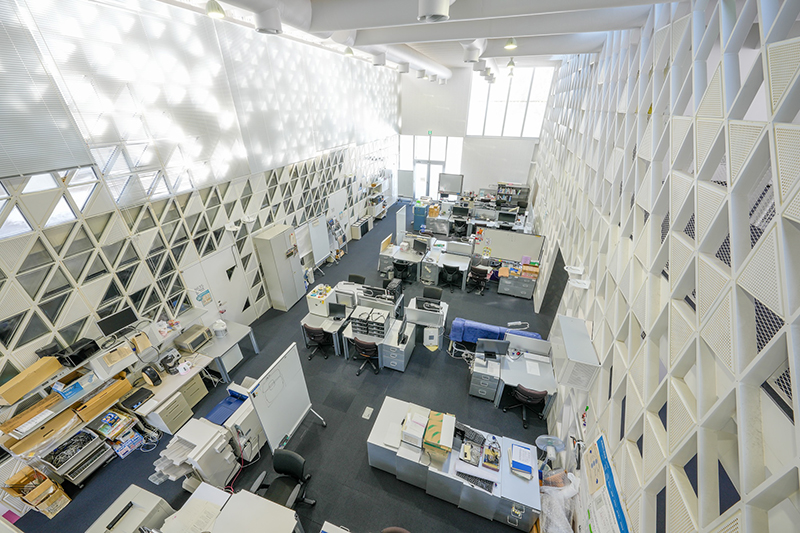
Future University Hakodate (116-2 Kamedanakano-cho, Hakodate City)
Fiscal Year 9 2027 Application guidelines for students
Fiscal Year 9 2027 Please download the student application guidelines from the link below.
- Fiscal Year 9 2027 Entrance Exam on School Recommendation
- Statement of purpose
- Letter of recommendation (PDF,Word)
Q&A
To help you understand our Comprehensive Entrance Exam and Entrance Exam on School Recommendation, we have compiled the following Q&A, which includes an overview of the entrance examinations as well as answers to frequently asked questions at admissions information sessions (admissions guidance).
Future University Hakodate Comprehensive Entrance Exam・Entrance Exam on School RecommendationQ&A