







































教員一覧 List of faculty members
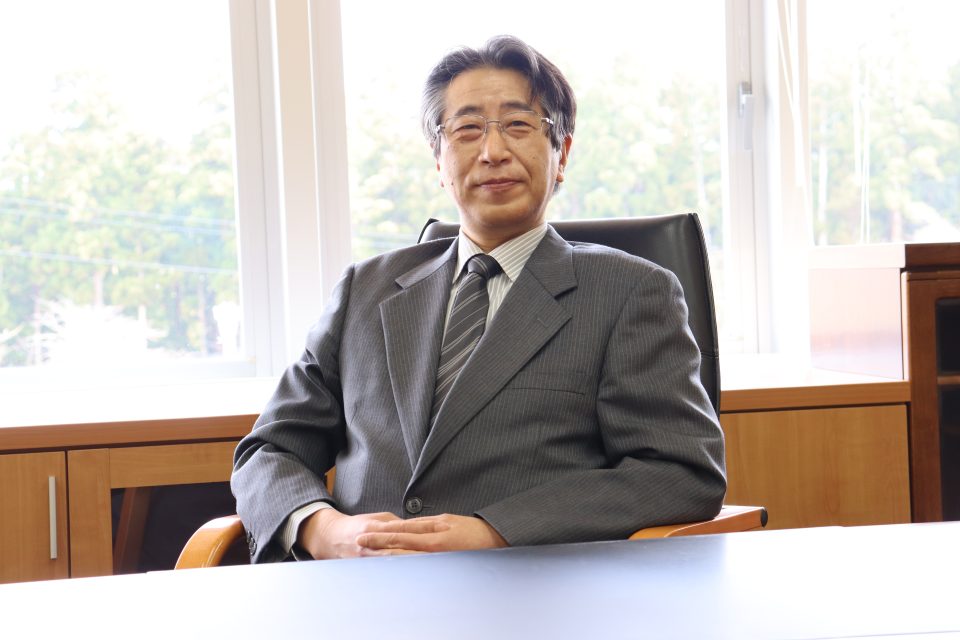
川越 敏司 教授
KAWAGOE, Toshiji Professor

川越 敏司 教授
KAWAGOE Toshiji所属:
複雑系知能学科、 複雑系情報科学領域
研究分野
ゲーム理論、実験経済学前職・前歴
埼玉大学担当科目(学部)
応用複雑系特論学位
博士(経済学)
KAWAGOE, Toshiji Professor
Affiliation:
Department of Complex and Intelligent Systems、 Complex System Information Science Field
Research Fields
Game Theory, Experimental EconomicsAcademic Background
Graduate School of Economics, Osaka City UniversitySubjects in Charge (Undergraduate)
Advanced Topics in Applied Complex SystemsDegree
Ph.D. (Economics)研究内容
ゲーム理論による社会・経済現象のモデル化および実験経済学による検証を行っています。特に、計算能力や情報の限界に起因する限定合理性の問題や、利他性・互恵性といった社会的選好の問題、メカニズム・デザインの問題や実験経済学の方法論・科学哲学的問題などに興味をもって研究してきました。
研究の魅力
経済学の研究はとかく理論先行で、なかなか実証的な検証が難しいのですが、実験室実験やフィールド実験、コンピュータ・シミュレーションなどを駆使して、生の現実に触れ、理論を改良していくことができるのが面白いところです。また、心理学や脳科学、人工知能といった周辺領域との共同研究ができるところも魅力です。
実績
限定合理性については、質的応答均衡(QRE)やレベルK理論の展開形ゲームへの応用(チープトーク・ゲームやムカデ・ゲーム)を行った。
社会的選好については、罪回避の理論の拡張を行った。
メカニズム・デザインについては、ピボタル・メカニズムのような誘因両立的メカニズムや公共工事入札、学校選択制度のマッチングなどについて実証実験を行ってきた。
主な著作・論文
- 川越敏司著『実験経済学』東京大学出版会, 2007年 2007
- 川越敏司著『行動ゲーム理論入門』NTT出版, 2010年 2010
- 川越敏司著『はじめてのゲーム理論』講談社ブルーバックス,2012年 2012
- 川越敏司著『現代経済学のエッセンス』河出書房新社,2013年 2013
- 川越敏司著『マーケット・デザイン オークションとマッチングの経済学』講談社選書メチエ,2015年 2015
- Yasuyo Hamaguchi, Toshiji Kawagoe, Aiko Shibata, “Group Size Effects on Cartel Formation and the Enforcement Power of Leniency Programs,” International Journal of Industrial Organization, Vol. 27, 145-167, 2009.
- Toshiji Kawagoe, Hirokazu Takizawa, “Equilibrium Refinement vs. Level-k Analysis: An Experimental Study of Cheap-talk Games with Private Information,” Games and Economic Behavior, Vol.66, No.1, 238-255, 2009.
- Toshiji Kawagoe, “Can Chocolate Be Money as a Medium of Exchange? Belief Learning vs. Reinforcement Learning”, Evolutionary and Institutional Economic Review, Vol. 5, No. 2, 279-292. 2009.
- Toshiji Kawagoe, Hirokazu Takizawa, “Level-k analysis of experimental centipede games,” Journal of Economic Behavior and Organization, 82, pp.548-566, 2012.
- Toshiji Kawagoe, Yusuke Narita “Guilt Aversion Revisited: An Experimental Test of a New Model,” Journal of Economic Behavior and Organization, vol.102, pp.1-9, 2014.
Research Contents
Game theoretic modeling of social and economic phenomena and its experimental evaluation. Particularly, game theoretic model of bounded rationality and social preferences (altriusm and reciprocity), experimental analysis of mechanism design, and methodology of experimental economics.
Attractive Factors of My Research
Experimental economics is a rapidly growing field of research in economics. Combinining laboratory experiment, field experiment, and computer simulation, validity of game theoretic analysis is investigated. Collaboration with psychology, neuroscience, and artificial intelligence is also conducted.
Achievements
As for research of bounded rationality, quantal response equilibrium (QRE) and level-k model are generalized to extensive-form games (cheap talk games and centipede games). For social preferences, guilt aversion model is refined. Finally, in the mechanism design problem, incentive compatible mechanism (pivotal mechanism), procurement auction, and school choice problem are investigaed experimentally.
Major Books and Papers
- Experimental Economics, University of Tokyo Press, 2007 (in Japanese)
- Introduction to Behavioral Game Theory, NTT Publishing, 2010 (in Japanese)
- Game Theory for Beginners, Kodansha Bluebacks, 2012 (in Japanese)
- Essencial Modern Economics, Kwade Shobo Shinsha, 2013 (in Japanese)
- Market Design: Economics of Auctions and Matching, Kodansha, 2015 (in Japanese)
- Yasuyo Hamaguchi, Toshiji Kawagoe, Aiko Shibata, “Group Size Effects on Cartel Formation and the Enforcement Power of Leniency Programs,” International Journal of Industrial Organization, Vol. 27, 145-167, 2009.
- Toshiji Kawagoe, Hirokazu Takizawa, “Equilibrium Refinement vs. Level-k Analysis: An Experimental Study of Cheap-talk Games with Private Information,” Games and Economic Behavior, Vol.66, No.1, 238-255, 2009.
- Toshiji Kawagoe, “Can Chocolate Be Money as a Medium of Exchange? Belief Learning vs. Reinforcement Learning”, Evolutionary and Institutional Economic Review, Vol. 5, No. 2, 279-292. 2009.
- Toshiji Kawagoe, Hirokazu Takizawa, “Level-k analysis of experimental centipede games,” Journal of Economic Behavior and Organization, 82, pp.548-566, 2012.
- Toshiji Kawagoe, Yusuke Narita “Guilt Aversion Revisited: An Experimental Test of a New Model,” Journal of Economic Behavior and Organization, vol.102, pp.1-9, 2014.