
















教員一覧 List of faculty members
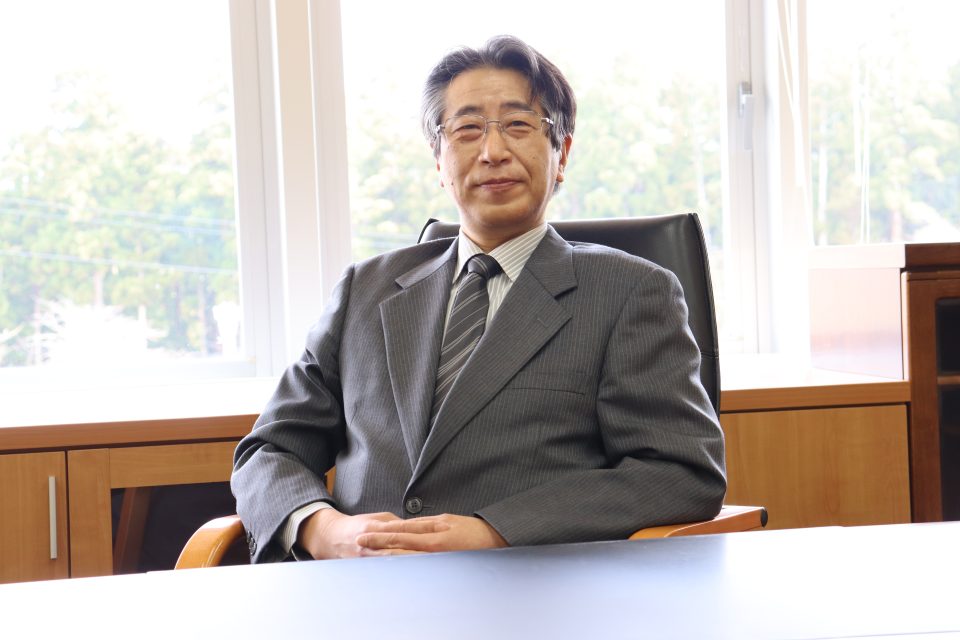
香取 勇一 教授
KATORI, Yuichi Professor

香取 勇一 教授
KATORI Yuichi所属:
複雑系知能学科、 情報アーキテクチャ領域、 複雑系情報科学領域、 知能情報科学領域
研究分野
脳の数理モデル、脳型人工知能前職・前歴
東京大学担当科目(学部)
解析学ⅠⅡ、カオス・フラクタルⅠ、データサイエンス入門担当科目(大学院)
非線形数理特論学位
博士(科学)
KATORI, Yuichi Professor
Affiliation:
Department of Complex and Intelligent Systems、 Media Architecture Field、 Complex System Information Science Field、 Intelligent Information Science Field
Research Fields
Mathematical modeling, Computational neuroscienceAcademic Background
The University of TokyoDegree
Ph.D. (in Science)関連リンク
研究ビジョン
知能とは、静的な計算規則ではなく、時間とともに変化するダイナミクスの中に現れる現象であると考えています。
本研究では、神経回路を高次元の非線形動的システムとして捉え、情報の表現・統合・予測・再編成がどのように生じるのかを力学系理論に基づいて解明します。アトラクタ構造の再構成、分岐現象、カオスダイナミクスといった概念を通じて、脳における柔軟な情報処理の原理を統一的に記述することを目指しています。
さらに、これらの動的原理をリザバーコンピューティングや物理リザバーへ展開し、エネルギー効率に優れた脳型人工知能(Brain-inspired AI)の設計原理を確立することを目標としています。理論解析・数値計算・実験的検証を横断し、ダイナミクスに基づく知能科学の体系化を目指します。
研究内容
本研究室では、非線形ダイナミクスおよび力学系理論を基盤とし、神経回路モデルの理論解析と計算機実装を通じて、脳の情報処理原理の解明と人工知能への応用を行っています。
脳は多数の神経細胞が相互作用する非線形動的ネットワークであり、その振る舞いは時間的文脈を含む複雑な構造を持ちます。本研究では、数理モデルの構築、分岐解析、数値シミュレーションを通じて、動的情報処理の機構を明らかにします。
特に、リザバーコンピューティング(Reservoir Computing)を中心とした時系列情報処理モデルの理論構築と応用展開に取り組んでいます。予測符号化や多感覚統合といった概念を動的ネットワークとして記述し、さらに物理リザバーや超低消費電力エッジAIへの応用を視野に入れています。
主な研究テーマ
- 非線形力学系に基づく神経回路モデルの解析
- リザバーコンピューティングの理論と応用
- 予測符号化と動的情報処理
- 前頭前野における表現切替の力学的解析
- 生体神経回路を用いた物理リザバー計算
研究実績
動的予測符号化とリザバー計算の統合による多感覚音声認識モデル
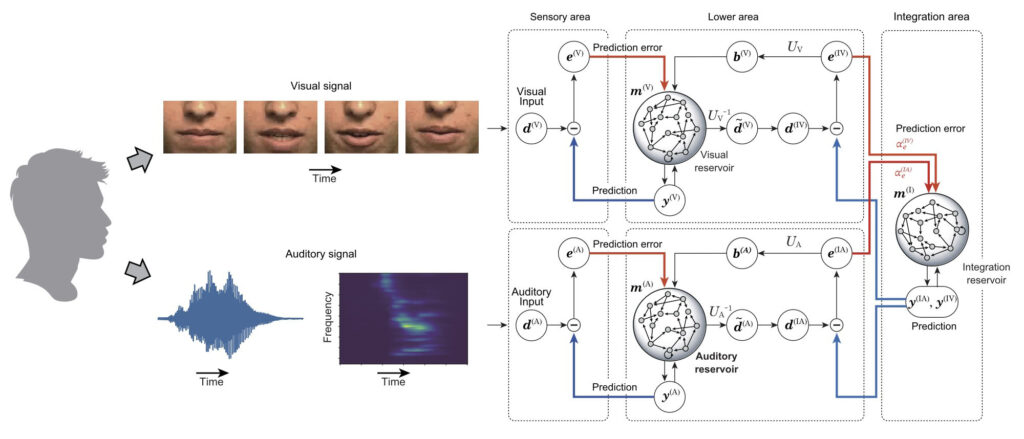
予測符号化理論とリザバーコンピューティングを統合した階層型神経回路モデルを提案し、多感覚音声認識課題においてノイズ環境下でも頑健な性能を実証しました。感覚信頼度に応じた重み付け機構を動的ネットワークに組み込み、再帰結合が時間文脈情報を抽出する仕組みを明らかにしました。多感覚統合を「動的予測過程」として記述する理論的枠組みを提示しています。
生体神経回路を用いた物理リザバー計算の実証
培養神経回路網の多細胞応答を光遺伝学刺激およびカルシウムイメージングにより計測し、リザバー計算フレームワークで解析しました。モジュール構造を持つ生体神経回路が短期記憶特性を活用して音声分類を実現できることを示し、さらに内部ダイナミクスが「汎化フィルタ」として機能することを実証しました。生体神経回路に基づく物理リザバー実装の基盤を築く成果です。
前頭前野モデルにおける表現切替の動力学的機構の解明
動的シナプスを含むスパイキング神経回路モデルを構築し、前頭前野における表現切替現象を再現しました。複数のアトラクタ集合がタスク文脈に応じて再編成される過程を、力学系の分岐現象として理論的に解析しました。柔軟な認知機能を支える神経回路機構をダイナミクスの再組織化として記述する枠組みを提示しています。
擬似ビリヤード系に基づく高次元動的リザバーの提案
ハイパーキューブ内の擬似ビリヤードダイナミクスを利用した新しいリザバー構造を提案しました。カオス的時間発展を制御可能な形で利用し、エコーステート性を保証する機構を導入しました。連続時間ダイナミクスを活用した時間領域情報処理の新原理を示し、ハードウェア実装への応用可能性を提示しています。
主な著作・論文
- Yoshihiro Yonemura, Yuichi Katori, “Dynamical predictive coding with reservoir computing performs noise-robust multi-sensory speech recognition,” Frontiers in Computational Neuroscience, 18, 1464603 (12pages), DOI:10.3389/fncom.2024.1464603, (2024).
- Takuma Sumi, Hideaki Yamamoto, Yuichi Katori, Koki Ito, Satoshi Moriya, Tomohiro Konno, Shigeo Sato, Ayumi Hirano-Iwata, “Biological neurons act as generalization filters in reservoir computing,” The Proceedings of the National Academy of Sciences (PNAS), 120, (25), e2217008120 (10 pages), DOI:10.1073/pnas.2217008120, (2023).
- Yoshihiro Yonemura, Yuichi Katori, “Network Model of Predictive Coding Based on Reservoir Computing for Multi-Modal Processing of Visual and Auditory Signals,” Nonlinear Theory and Its Applications, IEICE, 12, (2), pp.143-156, DOI:10.1587/nolta.12.143, (2021).
- Keita Tokuda, Naoya Fujiwara, Akihito Sudo, Yuichi Katori, “Chaos may enhance expressivity in cerebellar granular layer,” Neural Networks, 136, pp.72-86, DOI:10.1016/j.neunet.2020.12.020, (2021)(※日本神経回路学会論文賞受賞).
- Yuichi Katori, Hakaru Tamukoh, Takashi Morie, “Reservoir Computing Based on Dynamics of Pseudo-Billiard System in Hypercube,” 2019 International Joint Conference on Neural Network (IJCNN2019), N-20372 (8 pages), (2019)(※IJCNN2019 Best Paper Award受賞).
- Yuichi Katori, Kazuhiro Sakamoto, Naohiro Saito, Jun Tanji, Hajime Mushiake, Kazuyuki Aihara, “Representational Switching by Dynamical Reorganization of Attractor Structure in a Network Model of the Prefrontal Cortex”, PLoS Computational Biology, 7 (11): e1002266, (2011).
- 香取勇一、書籍の章:「神経回路の数理モデル」、『応用数理ハンドブック』、朝倉書店、 ISBN:978-4-254-11141-5,(2013年 2013 )
- 合原一究、辻繁樹、香取勇一、合原一幸、書籍の章:「脳の数理モデリング」、『現象数理学入門』 東京大学出版会、ISBN:978-4130629164、(2013年 2013 )
Research Contents
My major research interest is mathematical modelling of neural system and its applications. I have several interest including mathematical theory for modeling of biophysical system like a neural network of the brain and its application for physiology, medical science, and engineering. Current objectives are 1) to establish mathematical frameworks for analyzing network dynamics, statistical analysis, and data-driven modelling, 2) to elcidate pricipal of information processing on the brain with the modelling of the neural newotk and collaboration with physiologists, and 3) to develop a new framework of information processing based on the neural dynamics.
Achievements
Modeling and analyses of spiking neural network with dynamic synapses as a local circuit of the prefrontal cortex contributing to the planning and execution of sequential action generation and flexible information representation. Constructed the leaky integrate-and-fire based network model and derive the corresponding mean field model for bifurcation analysis of population neural dynamics. Successfully modeled and reproduced the electrophysiological data observed in primates during a related task.
Modeling and analyses of map-based stochastic neural network with dynamics synapses. Based on the statistical physics approach, derived the mean field model and performed bifurcation analysis on the uniformly connected network and on the associative memory network, which exhibits sequential memory retrieval.
Modeling and analyses of spiking neural network with electrical couplings as a local circuit of inferior olive nucleus, which contribute to the motor learning in cerebellum. Quantitatively modeled the conductance-based neural network with electrophysiological data. Analyzed its bifurcation structure and found that pharmacological treatments on the nucleus cause bifurcation of the neural dynamics. Further, estimated parameters with Bayesian approach. Analyzed information transfer efficacy on the bases of information theory.
Designed neuromorphic hardware with FPGA implementation of spiking neural network. Designed neural dynamics with minimal hardware resource consumption, preserving the phase-plane and bifurcation structure. Implemented this neuron to FPGAs as an associative memory network and evaluated its performance.
Major Books and Papers
- Yuichi Katori, “Mathematical models of neural network”, Handbook on applied mathematics, Asakura-Publishing, Tokyo, Japan, (in Japanese).
- Ikkyu Aihara, Shigeki Tsuji, Yuichi Katori, Kazuyuki Aihara, “Mathematical modeling of the brain”, Introduction to Phenomenological mathematics, University of Tokyo Press, Tokyo, Japan, (in Japanese).
- Yuichi Katori, Yosuke Otsubo, Masato Okada, Kazuyuki Aihara, “Associative Memory Network with Dynamic Synapses”, Advances in Cognitive Neurodynamics Vol.4, Springer, (2014).
- Yuichi Katori, Kazuhiro Sakamoto, Naohiro Saito, Jun Tanji, Hajime Mushiake, Kazuyuki Aihara, “Representational Switching by Dynamical Reorganization of Attractor Structure in a Network Model of the Prefrontal Cortex”, PLoS Computational Biology, 7 (11): e1002266, (2011).
- Yuichi Katori, Yosuke Otsubo, Masato Okada, Kazuyuki Aihara, “Stability analysis of associative memory network composed of stochastic neurons and dynamic synapses”, Frontiers in Neuroscience, Vol. 7, 6, pp.1-12,.
- Yuichi Katori, Eric J. Lang, Miho Onizuka, Mistuo Kawato, Kazuyuki Aihara, “Quantitative Modeling on Spatio-temporal Dynamics of Inferior Olive Neurons with Simple Conductance-based Model”, International Journal of Bifurcation and Chaos, Vol. 20 No. 3, 583-603, (2010).
- Yuichi Katori, Yasuhiko Igarashi, Masato Okada, Kazuyuki Aihara, “Stability Analysis of Stochastic Neural Network with Depression and Facilitation Synapses”, Journal of the Physical Society of Japan, 81, 114007, (2012).
- Jing Li, Yuichi Katori, Tahashi Kohno, “An FPGA-based silicon neuronal network with selectable excitability silicon neurons”, Frontiers in Neuroscience, Vol. 6, 183, (2012).
- Miho Onizuka, Huu Hoangm Mitsuo Kawato, Isao T. Tokuda, Nicolas Schweighofer, Yuichi Katori, Kazuyuki Aihara, Eric J Lang, Keisuke Toyama, “Solution to the Inverse Problem of estimating Gap-Junctional and Inhibitory Conductance in Inferior Olive Neurons from the Spike Trains by Network Model Simulation”, Neural Networks, Vol.47, pp.51-63, (2013).
- Yoshito Hirata, Yuichi Katori, Hidetoshi Shimokawa, Hideyuki Suzuki, Timothy A. Blenkinsop, Eric J. Lang, Kazuyuki Aihara, “Testing a neural coding hypothesis using surrogate data.”, Journal of Neuroscience Methods, Vol. 172 (2), pp. 312-322, (2008).
- Yuichi Katori, Naoki Masuda, Kazuyuki Aihara, “Dynamic switching of neural codes in networks with gap junctions”, Neural Networks, Vol. 19, Issue 10, 2006, 1463-1466, (2006).
- Yuichi Katori, “Simple algorithm for location estimation from Wi-Fi signal strength”, IEEE Intelligent Systems, Vol. 23, No. 1, p.10 (2008).
NEWS
「香取 勇一」に関連する最新のニュース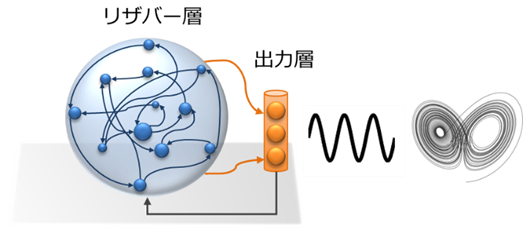
培養ニューロンによる機械学習で時系列信号生成を実証―人工ニューラルネットワークの機能を生体神経回路に実装―

脳に近づくAI ――教師なし学習を行うエコーステートネットワーク――

博士(前期)課程の学生2名が国際会議KJCCS2024で“Best Student Paper Award”をW受賞
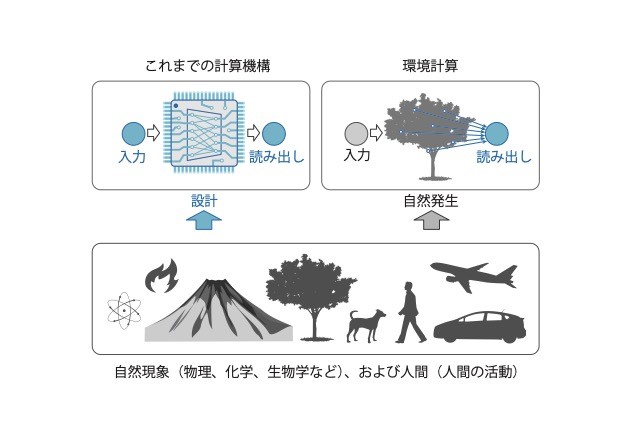
自然現象を計算資源にする「環境計算」を提唱し実証 ~植物のゆらぎパターンの映像を使ったソフト風速計~
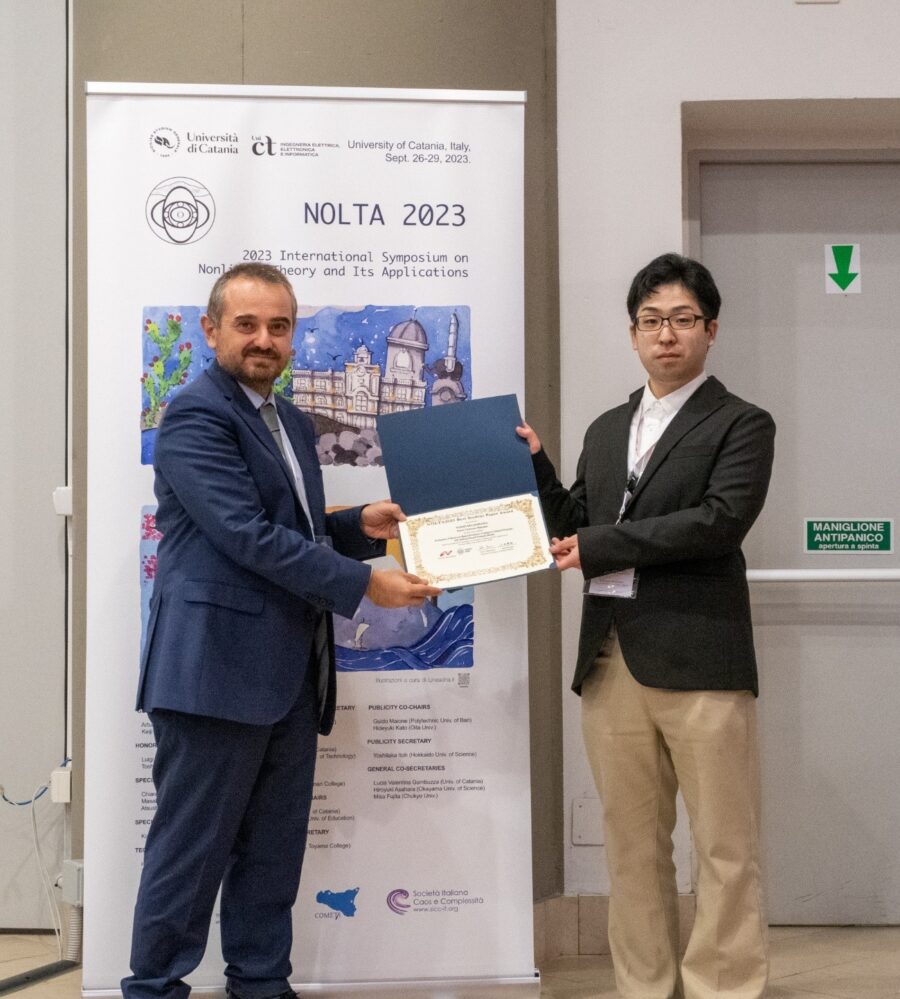
博士(前期)課程1年の石川慶孝さんが国際会議NOLTA2023で“Best Student Paper Award”を受賞
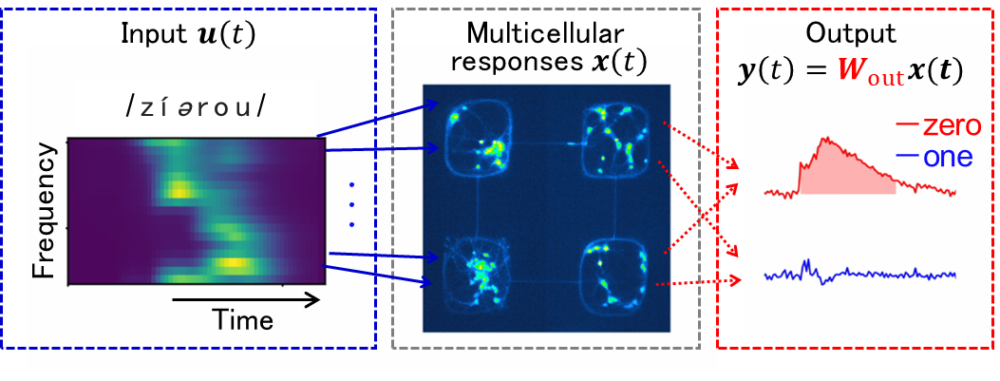
「人工培養脳」が時系列データの処理を改善~物理リザバーとして新たな可能性を拓く~
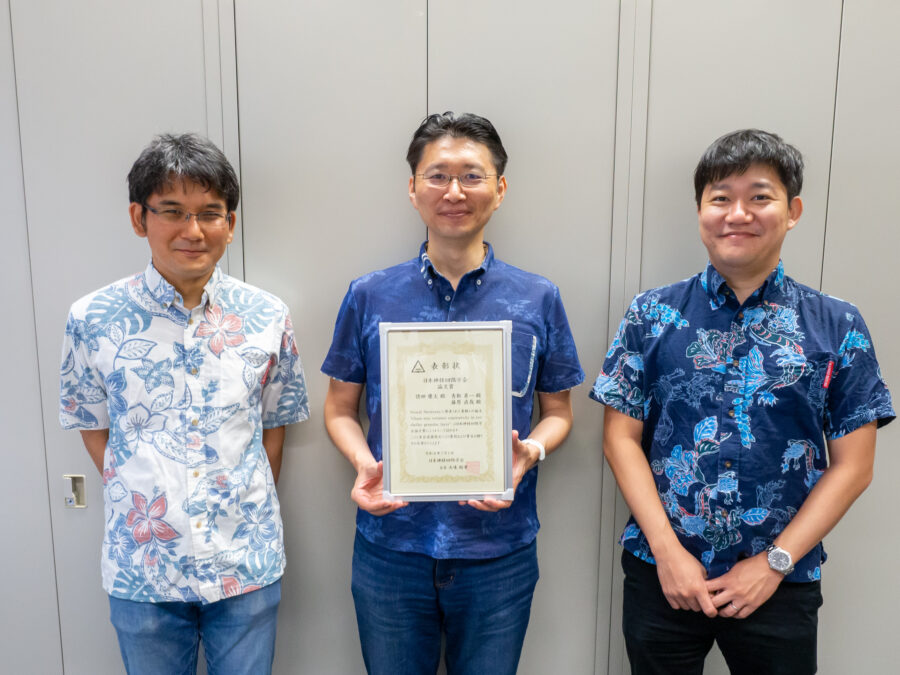
香取勇一教授らが日本神経回路学会論文賞を受賞
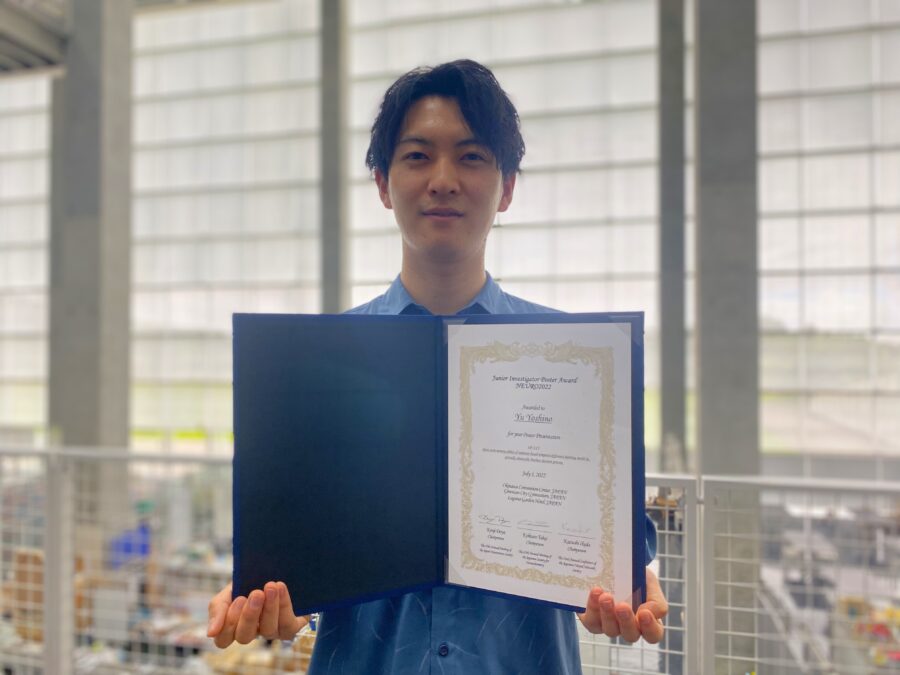
博士(前期)課程1年の吉野遊さんが国際会議NEURO2022で“Junior Investigator Poster Award”を受賞
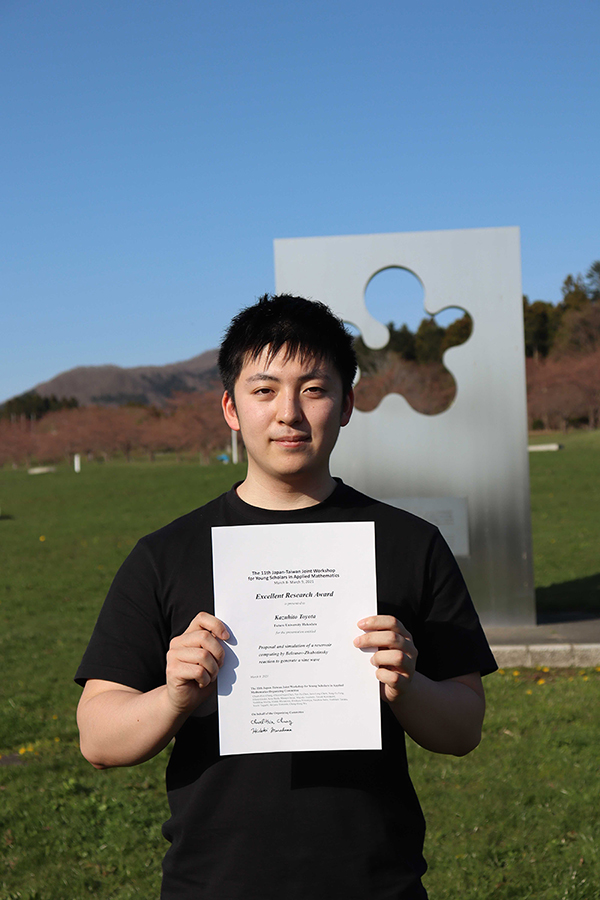
博士前期課程の豊田和人さんが国際研究集会で「Excellent Research Award」を受賞
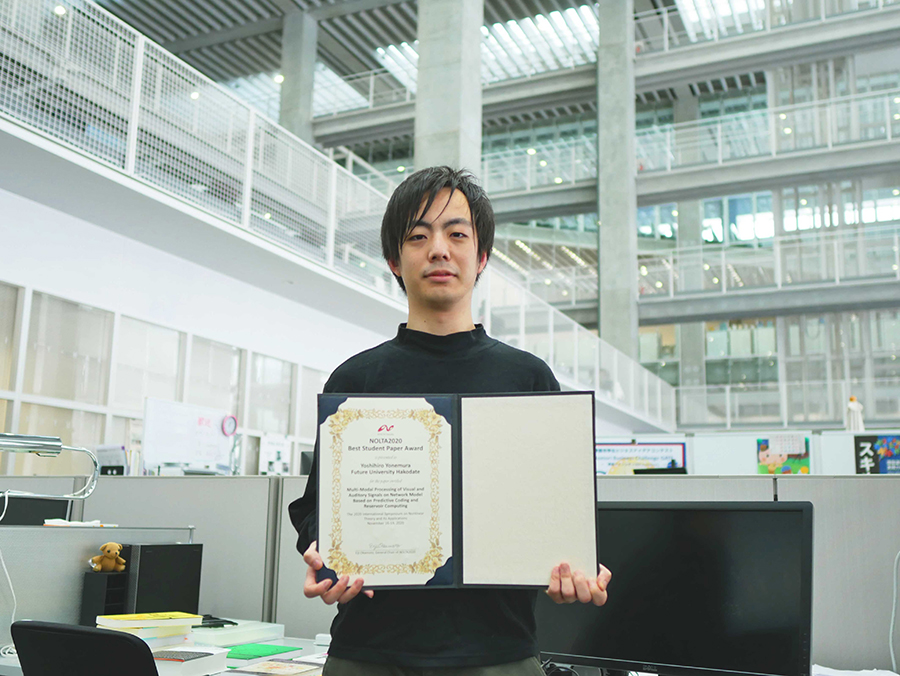
博士(前期)課程1年の米村祥裕さんが非線形科学の国際会議で最優秀学生論文賞を受賞

香取勇一准教授がニューラルネットワークの国際会議IJCNN2019で最優秀論文賞を受賞
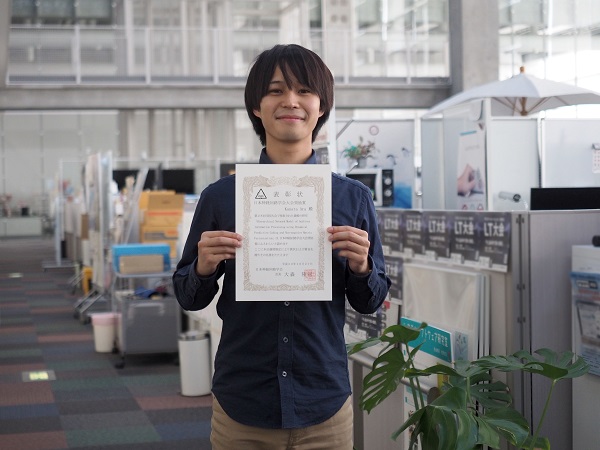
博士(前期)課程2年の荒哉太さんが日本神経回路学会で大会奨励賞を受賞